
One of my earliest memories is standing in the kitchen at my grandparents’ house in Port Arthur, Texas.
I was two or three years old. My grandfather raised German Shepherds, and a litter of puppies was playing nearby. At some point, two of them managed to wedge themselves between the washer and dryer. They were trapped and crying, and I remember feeling my heart begin to race as I listened to them yelp.
Looking back, I can see things now I couldn’t see then. My mother and grandmother were both carrying burdens I would not understand until much later in life. Mental illness had already woven itself into the fabric of our family story. The emotional atmosphere between them often felt tense and unpredictable. But children rarely understand the stories adults are carrying. They simply live inside them.
All I knew was that the puppies were crying and no one seemed to hear them.
So I did what children often do when something vulnerable matters to them. I tried to help.
To this day, I don’t know how I managed it. Whether it was adrenaline, determination, or some gift of strength that occasionally visits small children, I was able to move the dryer just enough for the puppies to wriggle free. The crying stopped. For a brief moment, so did the chaos.
In the new quiet, everyone looked at me.
More than sixty years later, I can still feel the distinctiveness of that moment. The relief. The attention. The sense that somehow I had done something important. I had brought order to disorder. I had helped. The problem was solved, the puppies were safe, and for a fleeting moment, I felt seen.
For a long time, I interpreted that memory as the moment I became a fixer, and there may be some truth in that. But lately I have begun to see something else.
The puppies mattered.
Vulnerability matters.
There is nothing unhealthy about being moved by suffering or noticing when something precious is trapped and unable to free itself. In fact, I suspect much of what is beautiful in the world begins when someone notices what others have overlooked. The world does not need fewer people who care. It does not need fewer people who are willing to step toward what is vulnerable, tender, and at risk.
What has captured my attention recently is not the compassion of that little girl, but the meaning she made from the experience.
Children are always making meaning. Long before we can explain our conclusions, we are drawing them. We are learning who we are, how the world works, what keeps us safe, and what is required to belong. We gather evidence from a thousand moments and slowly construct a story sturdy enough to live in.
I don’t remember consciously thinking any of this, but looking back, I can imagine the story beginning to take shape.
The puppies were trapped. I helped. The crying stopped. The adults noticed.
Perhaps this is how I matter.
Perhaps this is what I’m for.
Perhaps peace arrives when I can solve the problem.
Perhaps my place in the story is earned by making things better for everyone else.
The years that followed gave those conclusions plenty of opportunities to grow.

I grew up in the home of a Southern Baptist preacher and a mother who struggled deeply with mental illness. There was much that was beautiful in my childhood, and there were challenges that shaped me in ways I am still discovering. Like many children, I learned to adapt to the environment around me. I learned to pay attention to emotional weather. I learned to anticipate needs. I learned to help. I learned to carry responsibility.
What I did not know was that I was also learning something about belonging.
Not because anyone sat me down and taught me. In many ways, the people around me were doing the best they could with the stories they had inherited. But stories are powerful teachers, even when no one names them. They shape our expectations, our instincts, our fears, and eventually our identities.
The story I inherited quietly suggested that belonging followed worthiness. Belonging followed usefulness. Belonging followed achievement. Belonging followed getting it right.
I never would have said those words out loud. Yet when I look back through decades of prayer journals, I can see the evidence everywhere.
For years, my journals have contained two columns. In the first column, I confess my story. In the second, I listen for God’s story.
What amazes me is how often the confessions sound the same.
Different seasons. Different circumstances. Different problems.
The same story.
If I can solve the problem, I’ll be safe.
If I can keep everyone happy, I’ll be safe.
If I can get fit in, I’ll be safe.
If I don’t need anything from anyone, I’ll be safe.
The confessions still appear… in ministry, in relationships, in parenting, in my work, and in my own body. They surface in both obvious and subtle places. They change clothes from season to season, but underneath them all is the same assumption: peace depends on me.
That assumption feels almost invisible when you’ve lived with it long enough.
Like a fish describing water, I have become so familiar with the story that, sometimes, I can’t see it. I know beautiful truths about God. I know I am loved. I know my identity is secure in Christ. Yet somehow I can continue to organize my life around an economy where belonging has to be earned, safety has to be secured, and peace has to be achieved.
I often try to receive the fruits of one story while continuing to live inside another.
And, by the grace of God, that familiar story has begun to stop making sense.
The unraveling did not happen all at once. Looking back, it feels less like a breakthrough and more like a slow accumulation of evidence. There were health challenges that refused to cooperate with my usual strategies. There were conversations that exposed assumptions I didn’t know I was carrying. There were pages and pages of prayer journals revealing the same confessions in different costumes. Over time, I began to notice that the questions I was asking and the solutions I was pursuing belonged to the same story I inherited.
At first, I thought I was trying to solve a collection of unrelated problems. Blood pressure. Stress. Fatigue. Fear. Uncertainty. The ordinary challenges that accompany being human in a complicated world. Yet the more closely I looked, the more difficult it became to separate the symptoms from the environment producing them. What if these struggles were not isolated at all? What if they were connected by something deeper than I had considered?
One of the gifts of my time with Veritas Wellness was learning to pay attention to conditions that make flourishing possible. Dr. Ben Edwards often reminds people that symptoms matter, but symptoms are not the whole story. The deeper question is what environment made those symptoms possible in the first place. Lowering a number without addressing the inflammation beneath it leaves the underlying problem untouched. Treat the symptom without understanding the conditions that produced it, and eventually the symptom finds another way to announce itself.
That observation followed me far beyond physical health.
It followed me into my prayer journal. It followed me into my relationships. It followed me into my understanding of family, formation, and faith. Before long, I found myself wondering whether many of the struggles I was trying to solve were not problems to be managed at all, but invitations to understand the conditions beneath them.
For years, I treated peace as an outcome rather than an environment. I assumed it would arrive when the problem was solved, the uncertainty resolved, the diagnosis improved, or the plan finally came together. Without realizing it, I had pushed peace into the future and assigned it a job it was never meant to carry. It became the reward for getting life right rather than the soil in which life was meant to grow.
The more I sat with that realization, the stranger it seemed. If peace depends on circumstances cooperating with my expectations, then peace is remarkably fragile. A disappointing phone call can take it away. An unexpected diagnosis can take it away. A financial setback, a relational conflict, or a change in plans can take it away. What I had often called peace was really confidence that I could manage the circumstances around me.
And confidence in my ability to manage life is not the same thing as peace.
As these questions continued to surface, I noticed something else. The story I had inherited kept asking me to be my own source. It invited me to carry what I could not carry, control what I could not control, and secure what could never truly be secured. The more faithfully I followed that story, the more exhausted I became.
Yet on the pages of my prayer journal, another voice keeps interrupting the conversation.
When my story says, “If you can get this right, you’ll be safe,” God’s story sounds very different.
When my story says, “Carry more,” God’s story invites me to receive.
When my story says, “Figure it out,” God’s story invites me to trust.
The contrast is becoming impossible to ignore.
It is as though two different worlds are sitting side by side on the page. One is organized around earning, striving, proving, and securing. The other is organized around receiving, belonging, trusting, and participating. One assumes I must be the source of my own life. The other continually invites me to return to the Source.
I’m sitting with the contrast. I notice it in my prayers. I notice it in conversations. I notice it in the tension I carry in my body and the assumptions I carry in my mind. The more I pay attention, the more I realize that many of the questions I have been asking for years are really different versions of the same question.
How do I become safe?
Not physically safe. Deeper than that. How do I become secure? How do I know I belong? How do I know I matter? How do I know there is a place for me in the story?
Then one morning, while reading a post by Curt Thompson, I found myself sitting with a different question.
To whom do I belong?
The question lingered long after I finished reading. It seemed to be reaching beneath friendship, family, community, and every other place I had looked for belonging. The longer I sat with it, the more I realized I was carrying grief I could not quite name. Not grief over a particular event, but grief over a pattern. Grief over years spent trying to earn what could never be secured through effort. Grief over all the ways I had confused usefulness with worth and responsibility with belonging.
And then I found myself thinking about my mother.
What grieves me is not the details of her story. It's that no one ever showed her that there was another one. She spent her life trying to belong inside a world that required belonging to be earned, trying to secure peace through effort, trying to become enough in a story that was always asking for more.
She didn’t know there was another story.
The more I sit with that realization, the more I wonder how many people are living the same way. How many children are quietly constructing stories sturdy enough to live in but too small to flourish in? How many adults are exhausting themselves trying to earn what was designed to be received?
For years, I have known true things about God. I have articulated them clearly. I have taught them. I have defended them. Yet knowing a truth and living inside a truth are not always the same thing. A salmon may know it is a salmon, but that knowledge alone cannot help it flourish in a parking lot. Identity is real, but environments matter. Stories matter. Conditions matter.
Participating in the new story helped me see the new story.
And I did not reason my way into it. I did not achieve my way into it. I did not finally become disciplined enough to see it. Instead, I began receiving what has been available all along. I began paying attention to beauty. I began paying attention to rest. I began paying attention to nourishment, to morning light, to movement, to friendship, to prayer, to gratitude, and to the ordinary gifts that fill the Father’s house. And slowly, almost imperceptibly, my sight is beginning to change.
As I sat with the question of belonging, I sensed four words.
“You belong to us.”
The Father. The Son. The Spirit. I belong… not because I have finally gotten everything right. Not because I have become healthy enough, wise enough, productive enough, disciplined enough, or spiritually mature enough.
I belong because I am His.
The more I linger with those words, the more revolutionary they seem. They completely dismantle the story I inherited. The little girl standing in the kitchen believed she belonged because she helped. The woman writing in her prayer journal often believed she belonged because she carried responsibility well. The Father says something entirely different.
Suddenly, the entire economy changes.
If belonging is received, then worth does not have to be earned. If worth does not have to be earned, then peace does not have to be secured through achievement. If peace does not have to be secured through achievement, then I am free to participate rather than control. I am free to care without carrying. I am free to notice what matters without assuming responsibility for outcomes that belong to God.
The puppies matter. My mother mattered. Children matter. Families matter. The world matters. The problem is not that I care. Compassion was never the burden. The burden was the conclusion I quietly attached to it.
Somewhere along the way, we confuse participation with responsibility. We confuse compassion with control. We confuse being invited into the story with being responsible for the ending.
No wonder I am sometimes exhausted. And perhaps this is where the title of this article finally begins to make sense.
I am becoming unwilling—
Not unwilling to care, help, or participate in the healing and restoration of the world around me. If anything, I feel more alive to those invitations than ever before. What I am unwilling to do is continue living as though belonging must be earned. I am unwilling to spend another day chasing the rewards of a story I no longer believe is true, or to organize my life around proving what the Father has already declared.
Most of all, I am unwilling to live as an orphan in a house where I have been welcomed as a daughter.
That unwillingness does not feel like rebellion.
It feels like coming home.
If this resonated and you want to go deeper, join us at The Table — a free monthly gathering on the first Thursday of every month, 7-8 pm CT. Come human. Come hungry. Register here.
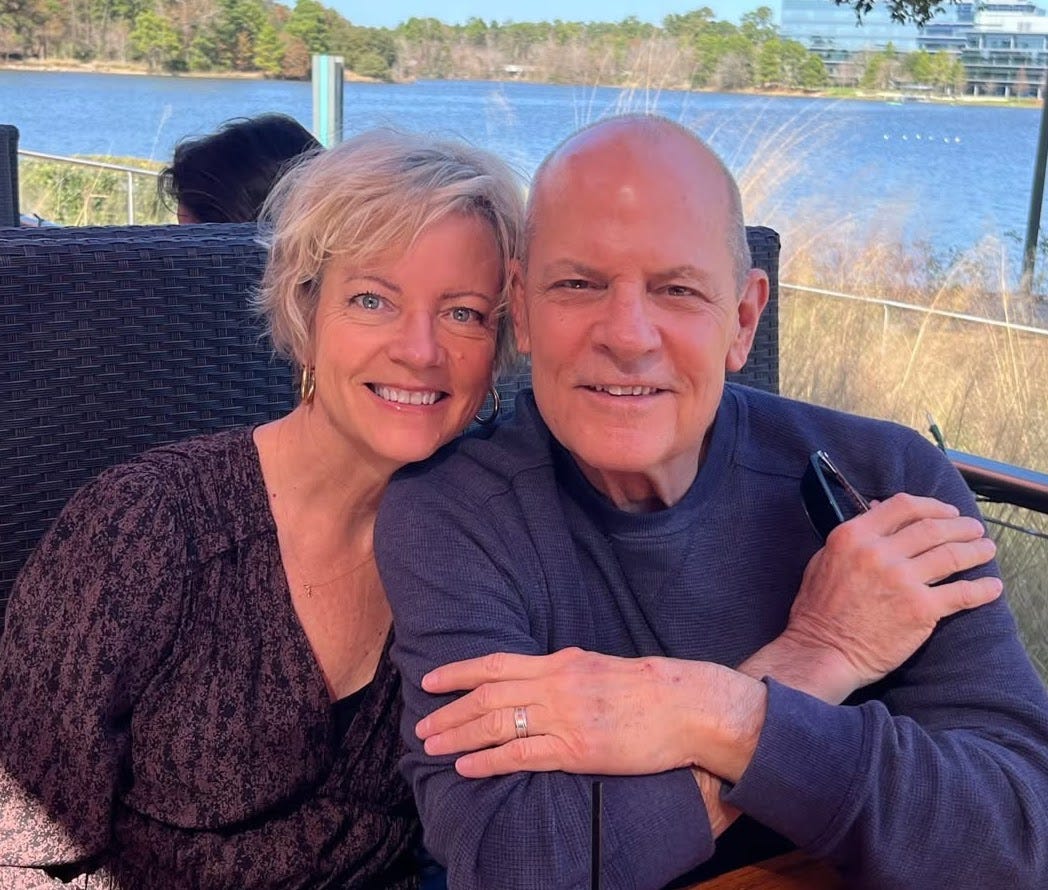
Janet Newberry is the founder of John 15 Academy and a writer, speaker, and family formation guide exploring what becomes possible when families are rooted in kingdom soil, with God as their Source. Through The Story Expedition and Love Is Fearless, she follows the questions and invites others to come see.
The Story Expedition doesn’t end on these pages. If something in this article stirred your imagination and you’re wondering what it might look like to explore these ideas in your family, school, church, business, or organization, I’d love to hear your story. Together, let’s go see what grows in our Father’s world.
All content and services are for informational and formational purposes.
Welcome home, Janet.