P is for Problems
Why problems feel different inside a story where life has a Source

Some problems announce themselves loudly.
A diagnosis. A broken relationship. A child struggling in ways you cannot explain. The kind of exhaustion that makes ordinary life feel strangely heavy. The phone call in the middle of the night. The marriage conversation you’ve been avoiding for months, because naming what is true feels riskier than continuing to live around it.
But some problems are quieter than that.
They sound more like, “I’m doing everything I know to do, and something still feels off.”
Quiet problems live in homes where everyone is functioning, but no one feels deeply rested. In marriages where two good people slowly become project managers instead of companions. In families where parents love their children fiercely and still find themselves reacting from places they thought had already healed. In people who know the language of grace and yet live with nervous systems that still brace for life as if love might disappear at any moment.
Some problems do not look like a crisis. They look like a life that never fully comes alive.

Many of us inherited a story that silently taught us what problems mean long before we had words for the lesson. Problems meant danger. Exposure. Failure. Evidence that something had gone wrong — and that someone needed to fix it quickly before things unraveled further.
You can feel this story at work when a child’s behavior feels bigger than the behavior itself. When their struggle awakens something ancient in you — fear, shame, urgency, self-protection. Suddenly, the moment is no longer about helping a young human navigate life. It becomes a referendum on whether you are succeeding, whether you are safe, whether you are enough.
Most of us do not arrive at adulthood believing these things consciously. We integrate them the way children absorb atmosphere — quietly, completely, through the emotional weather systems of the homes, schools, churches, and cultures that form us.
And in the story many of us inherited, problems become deeply threatening because everything depends on outcomes.
If my marriage struggles, something is wrong. If my child struggles, something is wrong. If I struggle, something is wrong. Failure becomes a verdict instead of information. Exhaustion becomes normal. Anxiety begins masquerading as responsible living. And because the pressure never fully lifts, we start reaching for solutions that promise relief, control, or certainty — even when those solutions quietly deepen the very exhaustion we are trying to escape.
Jesus invites us to take His yoke upon us because He understands how relentlessly heavy life becomes when we try to carry it apart from the Source of life itself.
Many of us wake up every day trying to produce peace rather than receive it. Trying to manage symptoms while remaining inside the very conditions producing them. Trying to become whole while living in ecosystems organized around performance, fear, self-protection, and scarcity.
And because these systems are so normal, we often mistake adaptation for maturity.
We call chronic anxiety responsibility. We call emotional numbness strength. We call exhaustion productivity. We call over-functioning love. We call coping peace.
Then our children begin exhibiting the side effects of the ecosystems we ourselves learned to survive, and we assume the problem is the child rather than the story that requires them to measure up, even when they’re very young.
Children’s stories often tell the truth about the systems the adults have learned to normalize.
Not because children are the problem. And not because parents are the problem. Living things simply reveal the environments they inhabit. Behavior is often labeled “wrong” when it’s a perfectly normal response to an ecosystem gone wrong.
I am beginning to wonder whether many of our struggles make more sense when we consider the worlds shaping us — worlds that quietly teach us to interpret ourselves, our children, and our problems through the language of scarcity, pressure, performance, and fear.
When Jesus said, “In this world you will have trouble,” I don’t think He was speaking theoretically.
He understood the weight of living in a world shaped by disconnection from the Source of life itself. A world where people hide from one another, strive for worth, fear not having enough, and exhaust themselves trying to carry what was never meant to be carried alone.
And still, He spoke of peace.
The question was never whether problems would come.
The deeper question is what kind of world we believe we are living in when they do.
Because problems mean something very different in a story where everything depends on you than they do in a story where life itself has a Source — and our Source never runs out.
In the old story, problems threaten identity because worth must constantly be earned, protected, managed, and proven. In the new story, problems can become places of revelation and realignment because identity is received before it is fully embodied.
The problems themselves may look surprisingly similar from the outside. Fear. Conflict. Uncertainty. Failure. Grief. Misunderstanding. Disappointment. Limits. Need.
But the environment changes what the problems mean.
In the world, struggle means you are falling behind. In the kingdom, struggle can become part of how roots grow deep enough to support coming alive.
In the world, failure becomes a verdict. In the kingdom, failure becomes information — an invitation into honesty, humility, learning, and dependence.
In the world, uncertainty feels intolerable because safety depends on control. In the kingdom, mystery becomes inspiring because safety comes from connection rather than certainty.
The kingdom does not make problems pleasant. It does not romanticize suffering. It does not remove grief from the human story.
The kingdom is the setting for our new story — and it means problems no longer carry the weight of defining who you are.
And that changes everything.
Because once problems stop functioning as verdicts, they can begin functioning as invitations.
An invitation to notice where we are exhausted in ways that trying harder cannot heal. An invitation to recognize the coping strategies we once needed but don’t want to live with forever. An invitation to tell the truth about what may be relieving pressure without actually nourishing life.
Problems may be an invitation to stop confusing behavior management with life itself.
Most of all, perhaps, problems are an invitation to return.
Not to perfection. Not to performance. Return to the Source of life itself. Return to the story we were made for, that is still available—and does not require us to generate everything from within ourselves. Return to the slow, disorienting, beautiful process of learning to receive what fear always insisted we had to earn.
Returning can feel strangely vulnerable after years spent surviving inside pressure-driven systems. Many of us learned to trust control more than connection, outcomes more than presence, and symptom management more than alignment and dependence. Goodness is exhausting when it is used to keep ourselves safe.
Which is why receiving often feels unfamiliar at first — not because it is wrong, but because we have spent so long surviving inside stories where everything depended on us.
I no longer believe the biggest goal of life is to eliminate all my problems.
The deeper invitation is to inhabit a story where problems no longer mean what we thought they meant.
A story where peace is not the absence of trouble, but the presence of a Love that stays with us. A story where parents do not have to keep pretending they are unaffected by the systems that formed them. A story where children are not projects to manage but image bearers growing inside living ecosystems that shape them every day, and we get to notice if they’re being formed for better or worse. A story where grace is not merely forgiveness after failure, but nourishment for life itself.
God will not skip us to get to our children.
The healing we long to see in our families often begins in the chapters where we ourselves are finally willing to stop surviving and start becoming alive in the kingdom that is at hand.
Perhaps that is why so many of us feel both drawn toward this new story and disoriented by it at the same time.
We know how to strive. We know how to manage. We know how to perform, optimize, minimize, cope, and push through.
Receiving is slower.
Trust is gentler.
Living connected to a Source we cannot control feels unfamiliar after years spent surviving inside systems that quietly taught us control was the road to safety.
And still, the invitation remains.
Not to deny our problems. Not to rush past them. Not to pretend they do not hurt.
But to begin seeing them inside a different story.
A story where life is not self-generated. A realm where grace is not scarce. A kingdom where love is not fragile. An ecosystem where roots can grow deep enough to hold both truth and tenderness at the same time.
A story where problems are no longer proof that you are failing.
But invitations from a Source who is still teaching us how to come fully alive.
Together, there is great hope.
If this resonated and you want to go deeper, join us at The Table — a free monthly gathering on the first Thursday of every month, 8-9 pm CT. Come human. Come hungry. Register here.
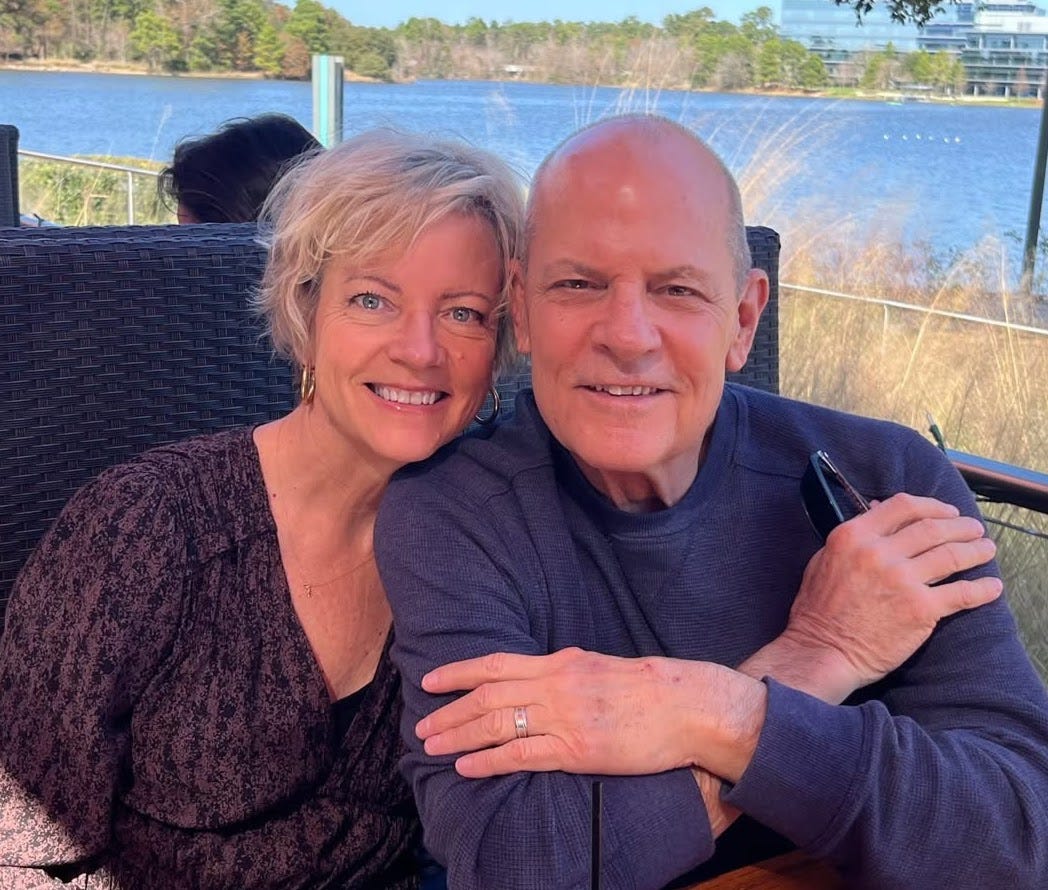
Janet Newberry writes about what becomes possible when families stop managing symptoms and start healing their story. Through John 15 Academy, formation cohorts, and the Love Is Fearless podcast, she helps parents and families live in the story they were made for — moving from pressure and performance toward lives rooted in connection, flourishing, and the restoring love of God.
Janet’s work integrates faith, neuroscience, attachment, and family formation, but it is not a substitute for licensed mental health care, therapy, or counseling. If you or someone in your family is experiencing acute mental health symptoms, abuse, trauma, or crisis, please seek support from a qualified mental health professional.
All content and services are for informational and formational purposes.
I knew this was going to be a good one. I’ve got so many notes! This is truly a new way to look at life and problems 💜
This is SO rich in Truth. Thank you.